Solyanka. A Perfect Dish for the Morning After

Two years ago, we went on a business trip to Riga. We arrived in the afternoon, the day before our official meetings. Riga offers a wide array of restaurants, but my colleagues were meticulous in researching recommendations online. When we finally settled into a restaurant and began reading the menu, one of our companions rubbed his hands together in anticipation and exclaimed, Solyanka! Curious, I asked, What’s that? You don’t know? he replied. You must try it. It’s absolutely delicious, though quite salty. Intrigued, I took his advice and ordered it.

I must admit, the tradition of Solyanka was unfamiliar to me, likely due to my family’s culinary preferences, even though it seems to be considered a national dish in my country. I enjoyed it immensely. A year later, I had it again in a restaurant in Tallinn. On both occasions, I didn’t pay much attention to the ingredients. It wasn’t until earlier this year, while I was preparing traditional Polish cucumber soup, that I happened to watch a popular cooking show where the host was making Solyanka. That’s when I realized that to make Solyanka, I would need to add more sour brine from the cucumbers, along with some tomato paste and sausage. Luckily, I had all the ingredients in my fridge, so I decided to make Solyanka instead of cucumber soup. The host of the cooking show said, solyanka was the perfect cure for the morning after, to cope with a hangover after a party. On second thought, I agree.

Solyanka is a traditional Eastern European soup known for its rich, tangy flavour, typically made with meat, fish, or mushrooms. It’s popular in several countries, each with its variations. In Russia, solyanka includes a mix of meats (beef, pork, or sausage), fermented cucumbers, olives, capers, onions, tomato paste, and is often served with lemon and sour cream. Ukrainian solyanka is similar but may include additional vegetables like carrots and potatoes, giving it a milder, more balanced flavour. Belarusian solyanka focuses on smoked meats, providing a rich, smoky taste. In East Germany, solyanka, introduced after World War II, is now traditional. It usually features sausages, fermented cucumbers, onions, tomato paste, and bell peppers, often with a thicker, stew-like consistency and a milder flavour. Latvian Solyanka also incorporates potatoes and local spices, while Lithuanian solyanka often uses local sausages, adding a deeper, smokier flavour. Polish solyanka is similar but might include smoked fish, giving it a unique twist. In Kazakhstan, solyanka is spicier, reflecting local tastes. Overall, while the basic concept of Solyanka remains consistent, each country adds its regional touch, making this soup a versatile and cherished dish across Eastern Europe.

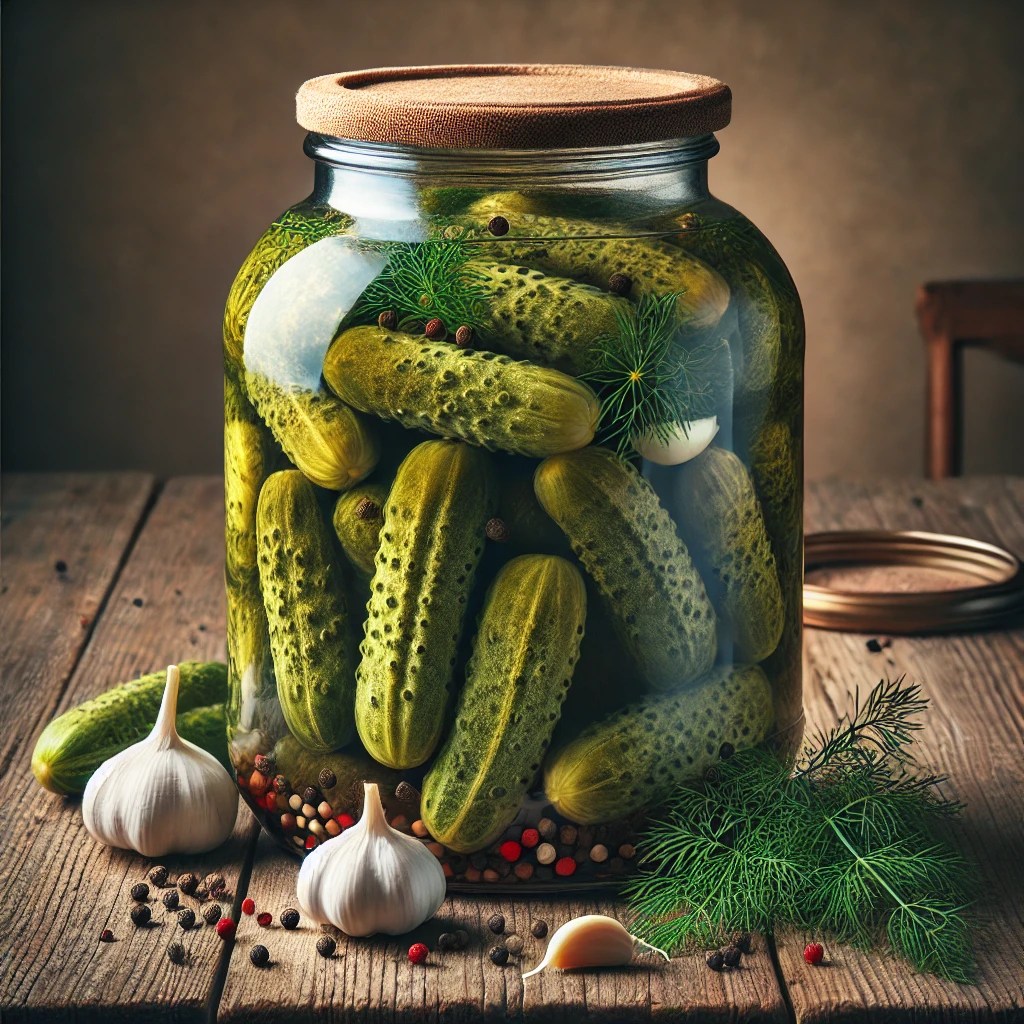
Before I explain how to make solyanka (using the recipe I followed for my very first homemade version), I should clarify the difference between fermented cucumbers and pickled cucumbers. For solyanka, you need to use fermented cucumbers along with the brine they were fermented in. Fermented cucumbers, which are naturally fermented in a salt brine, have a sharp, tangy flavour that adds an essential sour note to solyanka. This tanginess is crucial, as it balances the richness of the meats and other hearty ingredients in the soup. In contrast, pickled cucumbers, preserved in a vinegar-based solution, tend to be sweeter and milder. While they are delightful in many dishes, they are not suitable for solyanka, as they lack the bold sourness needed for this dish. To create a truly authentic solyanka, always opt for fermented cucumbers, ensuring your soup reflects the true spirit of Eastern European cuisine.

To make traditional fermented cucumbers, start by preparing a brine by dissolving one tablespoon of salt in one liter (4 cups) of water. You’ll need about one kilogram of small, firm cucumbers, which should be washed thoroughly. In a large, clean glass jar or ceramic crock, place a layer of fresh dill, about one bunch, along with 4-6 cloves of garlic (slightly crushed), a teaspoon of whole black peppercorns, and 2-3 bay leaves at the bottom. Arrange the cucumbers upright in the jar, packing them tightly, and add more dill, garlic, and, optionally, a few pieces of horseradish root as you fill the jar. Once the jar is full, pour the brine over the cucumbers, ensuring they are completely submerged. If needed, place a weight on top of the cucumbers to keep them below the brine. Cover the jar loosely with a cloth or lid, and leave it at room temperature for 3-7 days, depending on how sour you want the cucumbers to be. During fermentation, the cucumbers will develop a sharp, tangy flavor. Taste them after a few days to see if they’ve reached your preferred level of sourness. Once you’re satisfied, transfer the jar to the refrigerator to slow down the fermentation process. The fermented cucumbers can be stored in the fridge for several weeks, maintaining their crunchy texture and vibrant taste. Regularly check the surface of the brine and skim off any foam or scum that forms during fermentation.

To prepare a hearty Solyanka with fermented cucumbers, sausage, and potatoes, start by making a robust stock. Begin with about 1.5 liters of beef or chicken broth, simmered from bones with vegetables such as carrots, celery, and onions, to create a rich, flavorful base. This stock should be well-seasoned with salt and pepper and can be prepared in advance or made fresh on the day. In Poland, many homemakers often prepare larger quantities of broth so that they can use the stock in the following days to make other soups.

Heat a large pot over medium heat and add a tablespoon of butter or oil. Finely chop one large onion and sauté it until golden brown. Add two cloves of minced garlic and cook for another minute until fragrant. Next, slice 200–300 grams of smoked sausage and add it to the pot. Fry the sausage until it begins to brown.

Meanwhile, peel and dice two medium-sized potatoes into bite-sized pieces. Add the potatoes to the pot, stirring them with the sausage and onions. To help the potatoes cook more evenly in the soup, you can briefly soak them in boiling water, then drain before adding.

Pour in your prepared broth, bringing everything to a gentle boil. Reduce the heat and let the soup simmer until the potatoes are tender (about 15 minutes). While the soup simmers, take four fermented cucumbers (about 200 grams) and dice them. Add the cucumbers to the pot along with two tablespoons of tomato paste. Stir well to combine. Pour in about 100 ml of cucumber brine to enhance the flavour. Let the soup simmer for another 10 minutes. For seasoning, add a teaspoon of smoked paprika, half a teaspoon of ground cumin, and a bay leaf. Taste and adjust with salt, pepper, or more brine if needed. Once done, remove the bay leaf and serve.

Ladle into bowls and top with a dollop of sour cream or yoghurt and a few lemon slices. Fresh dill or parsley makes a perfect garnish.

You may also like the recipes for: French Onion Soup, German Potato and Sausage Eintopf, Lithuanian Cold Beet Soup, French Beef Bourguignon, or New Zealand Chowder.

Solyanka. A Perfect Dish for the Morning After

The Cold Beet Soup: A Refreshing Eastern European Dish for Summer

Usually, when travelling and taking photos, I focus on architecture, artefacts, and landscapes. Occasionally, I photograph dishes served in local restaurants, but these photos rarely capture the taste and ingredients. When I have the time and inclination to cook, I try to follow traditional recipes found online to recreate the flavours and aromas of the dishes I’ve tried abroad. The cold beat soup is also a traditional dish in my country. In fact, it was even served today in the canteen where I work.

It’s a seasonal soup, served as a refreshment in the summer. As you might have guessed, this soup is served cold and is best enjoyed straight from the fridge. Unusual, isn’t it?

Cold beet soup, to my knowledge, originates from Lithuania, where it is called Šaltibarščiai. In Lithuania, the traditional ingredients for cold beet soup typically include beets, kefir or buttermilk, cucumbers, fresh dill, green onions, and hard-boiled eggs, with sour cream as an optional addition. Boiled potatoes are often served on the side.

However, as many territories in Central and Eastern Europe were part of the Polish-Lithuanian Commonwealth during the Medieval Ages, this dish is widespread in present-day local kitchens in numerous countries. In Poland, it is known as Chłodnik, closely resembling the Lithuanian version with ingredients like beets, cucumbers, kefir or yogurt, and dill. In Russia, a similar soup called Svekolnik often includes kefir, cucumbers, hard-boiled eggs, and sometimes kvass instead of dairy. Latvia‘s version, Aukstā zupa, features beets, kefir, cucumbers, dill, and sometimes boiled potatoes or radishes. Ukraine’s Holodnyk is made with beets, kefir or sour cream, cucumbers, and occasionally radishes and green onions. Belarus serves Khaladnik, which includes beets, cucumbers, kefir, and is typically garnished with fresh herbs like dill and green onions.

Some time ago, I tasted cold beet soup in a Jewish restaurant in Tykocin, Northern Poland (closer to Lithuania than Warsaw where I live), which differed slightly from the version I know from Poland and Vilnius. It maintained the core components but was additionally flavoured with garlic and horseradish for extra zest. As far as I can recall, but it might have been in another restaurant, pickled cucumbers and radish had been added to the soup. What is interesting, I always thought this soup was impossible to ruin. But a few weeks ago, I was in a quite renowned restaurant in Warsaw, where I was served the worst cold beet soup I have ever had. The chef filled the soup with an excessive amount of dill and garlic, making it inedible. Dill and garlic are simply meant to be flavourings in a good cold beet soup, not its main ingredients.

To make the traditional Lithuanian cold beet soup, you will need the following ingredients (4-6 servings):

  • 4 medium-sized beets
  • 1 litre of kefir or buttermilk
  • 2 cucumbers
  • 4 green onions
  • a small bunch of fresh dill (about 30 grams)
  • 4 hard-boiled eggs
  • 2 tablespoons of sour cream (optional)

Start by boiling the beets until they are tender. Once cooked, peel and grate the beets into a large bowl. Pour the kefir or buttermilk over the grated beets and mix well to combine. This step ensures that the beets are thoroughly blended with the dairy, creating a smooth base for the soup.

Next, finely chop the cucumbers, green onions, and fresh dill, and add them to the beet mixture. Peel and chop the hard-boiled eggs into small pieces and stir them into the bowl. If desired, add a spoonful of sour cream to enhance the creaminess and flavour of the soup. Season the mixture with salt to taste, and let it chill in the refrigerator for at least an hour to allow the flavours to meld. When ready to serve, ladle the chilled soup into bowls and garnish with additional dill or green onions if desired.

You may also like the recipes for: French Onion Soup, German Potato and Sausage Eintopf, French Beef Bourguignon, East European Solyanka or New Zealand Chowder.

The Cold Beet Soup: A Refreshing Eastern European Dish for Summer

Cooking French. Boeuf Bourguignon

Boeuf Bourguignon is on must taste list while in France. It is a standard of the French cuisine, although not necessarily rooted in Burgundy. Different stories can be found on the internet on its origins. The very but very Burgundy beef Bourgignon is prepared with beef originated in Burgundy and flavored with dry, dark red Burgundy wine based on Pinot noir grapes. But even with some good quality ingredients coming from different regions, you can prepare a genuinely delicious Boeuf Bourguignon.

The Boeuf Bourguignon of my own cooking. It is probably not an everyday dish. Still, it is my favorite way of preparing beef, that I make several times a year. This one I made last weekend.

Boeuf Bourguignon is a beef stew braised in dry red wine, some brandy, cooked and roasted with bacon, carrots, leek, onions, garlic, pearl onions, and champignons, flavored with salt, pepper as well as herbs – parsley, thyme, and bay leaf. The cooking process is long-lasting, best if spread over two days, but still, Boeuf Bourguignon is relatively easy to prepare. The long cooking process gives the beef its flavor. On the other hand, breaking down the cooking process in two days (or even three if you decide to prepare a marinade) and letting beef chill after the first baking stage allows the beef to tenderize.

THE INGREDIENTS

The ingredients for six serves (according to original recipe, I sometimes change the proportions to my preference) are for the stew: 1.5 kg stewing beef (e.g. chuck, shin or brisket), cut into 4–5 cm cubes, 150 g smoked streaky bacon or lardons, 500 ml dry red wine (such as Burgundy or Pinot Noir), 500 ml beef stock, 2 carrots, sliced into rounds, 1 leek (white part only), sliced, 1 large onion, thinly sliced, 2 garlic cloves, crushed, 2 tbsp plain flour, 1 tbsp tomato purée, 2 tbsp vegetable oil, 50 g unsalted butter, 2 tbsp Cognac (optional), 1 bay leaf, a few sprigs of fresh thyme and flat-leaf parsley, tied into a bouquet garni, salt and freshly ground black pepper. For the garnish you will need: 8 small shallots or 24 pickled pearl onions, 200 g small button mushrooms, whole or halved, 1 tsp caster sugar, 1 tbsp butter (for glazing shallots), 1 tbsp butter (for frying mushrooms). Optional for thickening you will need for beurre manié: 1 tbsp softened butter mixed with 1 tbsp flour.

Begin the day before by preparing a marinade. In a large bowl, combine the beef cubes with the sliced onion, carrots, leek, garlic, bay leaf and thyme. Pour over the red wine, cover the bowl, and place it in the fridge overnight. This not only infuses the meat with complex flavour but also tenderises it beautifully.

THE MAKING OF IN THE FIRST DAY

To prepare the ingredients, you will need a pan and later a bigger casserole (I use a bigger pot as usually I prepare it in bigger quantities).

First, you sear bacon, then beef and later the vegetables in a pan. Start by blanching the bacon in simmering water for 2 minutes to reduce its saltiness and render some fat. Drain and then fry the bacon in a heavy-based pan until crisp and golden. Set aside. Remove the beef from the marinade and pat it thoroughly dry with kitchen paper – this ensures proper browning. In batches, sear the meat in a mixture of oil and butter over high heat until richly coloured on all sides. Set the browned beef aside.

Sauté the reserved vegetables from the marinade in the same pan until slightly softened, then sprinkle in two tablespoons of plain flour and stir well to coat. Return the beef and bacon to the pan, pour in the reserved wine and 500 millilitres of beef stock, stir in one tablespoon of tomato purée and, optionally, two tablespoons of Cognac. Add a bouquet garni of thyme and parsley stalks tied with kitchen twine. Bring everything to a gentle simmer, then cover and transfer to an oven preheated to 150°C. Before you cover the casserole you must see that all ingredients are covered with the brew. What you add (more wine, beef brew, or some water) is your choice, but do not mind if the brew is strong. The next day, you will add the remaining ingredients. They will balance the flavor. Now it’s time to put the casserole into the oven heated to 150°C for at least two hours. At this point, the dish may be cooled and refrigerated overnight.

THE SECOND DAY

The stew chilled the next day, ready to absorb the other ingredients.

Return the stew to a pot and cook uncovered for an additional hour to reduce and concentrate the sauce. During the final cooking stage, prepare the garnish. If using fresh shallots, peel eight small ones and place them in a pan with a tablespoon of butter, a teaspoon of caster sugar, and a splash of water. Cover and cook gently until the shallots are tender and lightly caramelised. Separately, sauté 200 grams of button mushrooms in butter until browned. If using 24 pickled pearl onions instead of fresh shallots, they may be added directly to the stew without cooking.

Add the shallots and mushrooms to the stew during the final 30 minutes of cooking. If the sauce needs thickening, stir in beurre manié – a mixture of one tablespoon of softened butter and one tablespoon of flour – and allow it to simmer gently until the sauce reaches a smooth, velvety consistency.

Serve hot with mashed potatoes, crusty bread, buttered noodles or pearl barley. Once the method is mastered, feel free to modify the quantities – for instance, by adding more vegetables to create a more balanced and complete meal.

You may also like the recipes for: French Onion Soup, German Potato and Sausage Eintopf, Lithuanian Cold Beet Soup, East European Solyanka or New Zealand Chowder.

Cooking French. Boeuf Bourguignon